Imarets were charitable institutions established through endowed foundations (vakıf) created for the benefit of society.
In certain respects, they occupied a place similar to that of major monastic foundations in the Byzantine world, bringing together education, nourishment, hospitality and public service within a single institution.
Although commonly associated with their kitchens, imarets were far more than places where food was distributed. They often formed part of larger complexes that included schools, libraries, places of worship, fountains, baths, hospitals and accommodation for students, travellers and Sufis or the poor. Through these institutions, they supported both the daily needs and the intellectual life of the communities around them.
First established in the fourteenth century by Nilüfer Hatun, Imarets became an important part of civic life across the Ottoman world, serving travellers, students, scholars and local communities for generations.
History
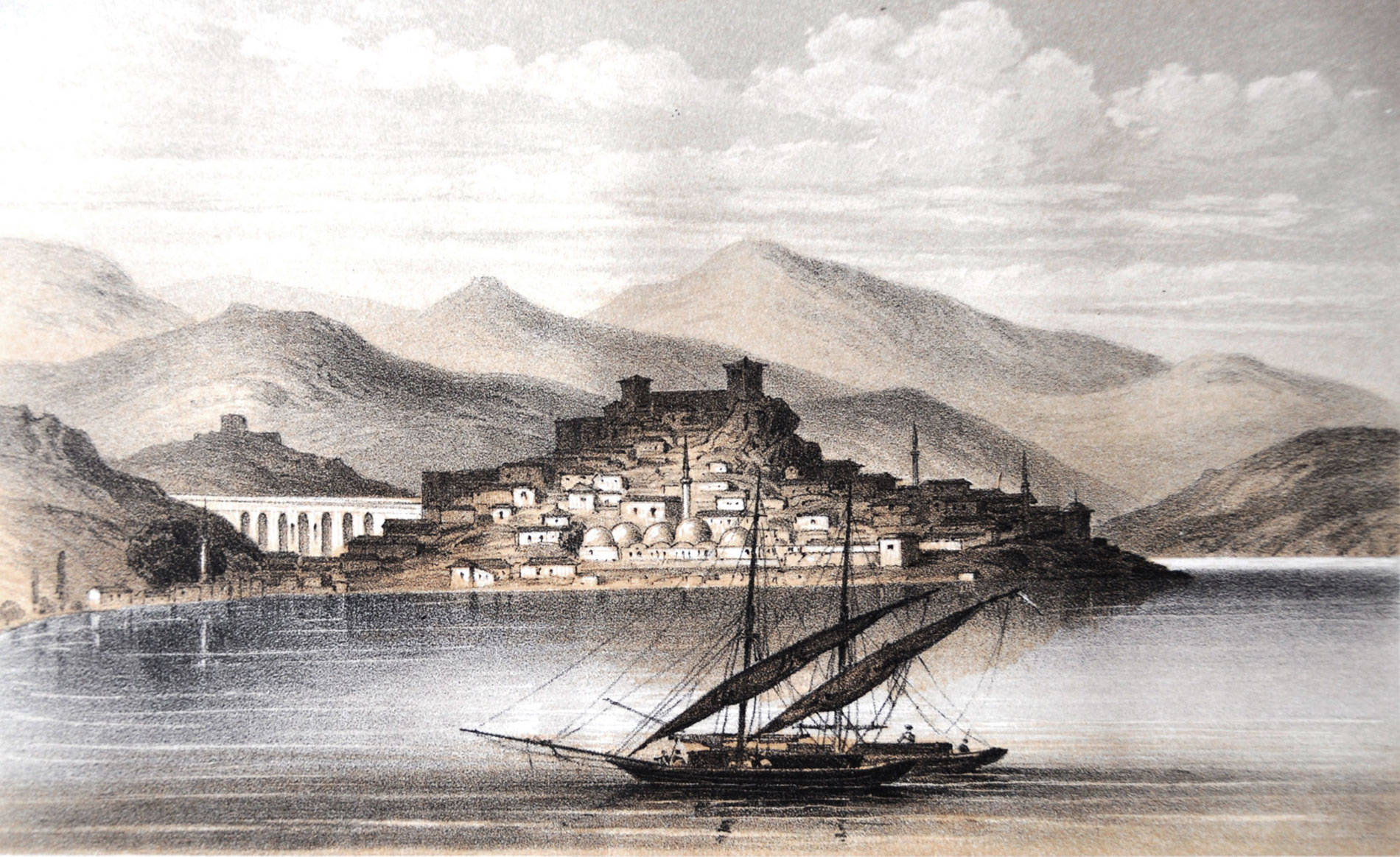
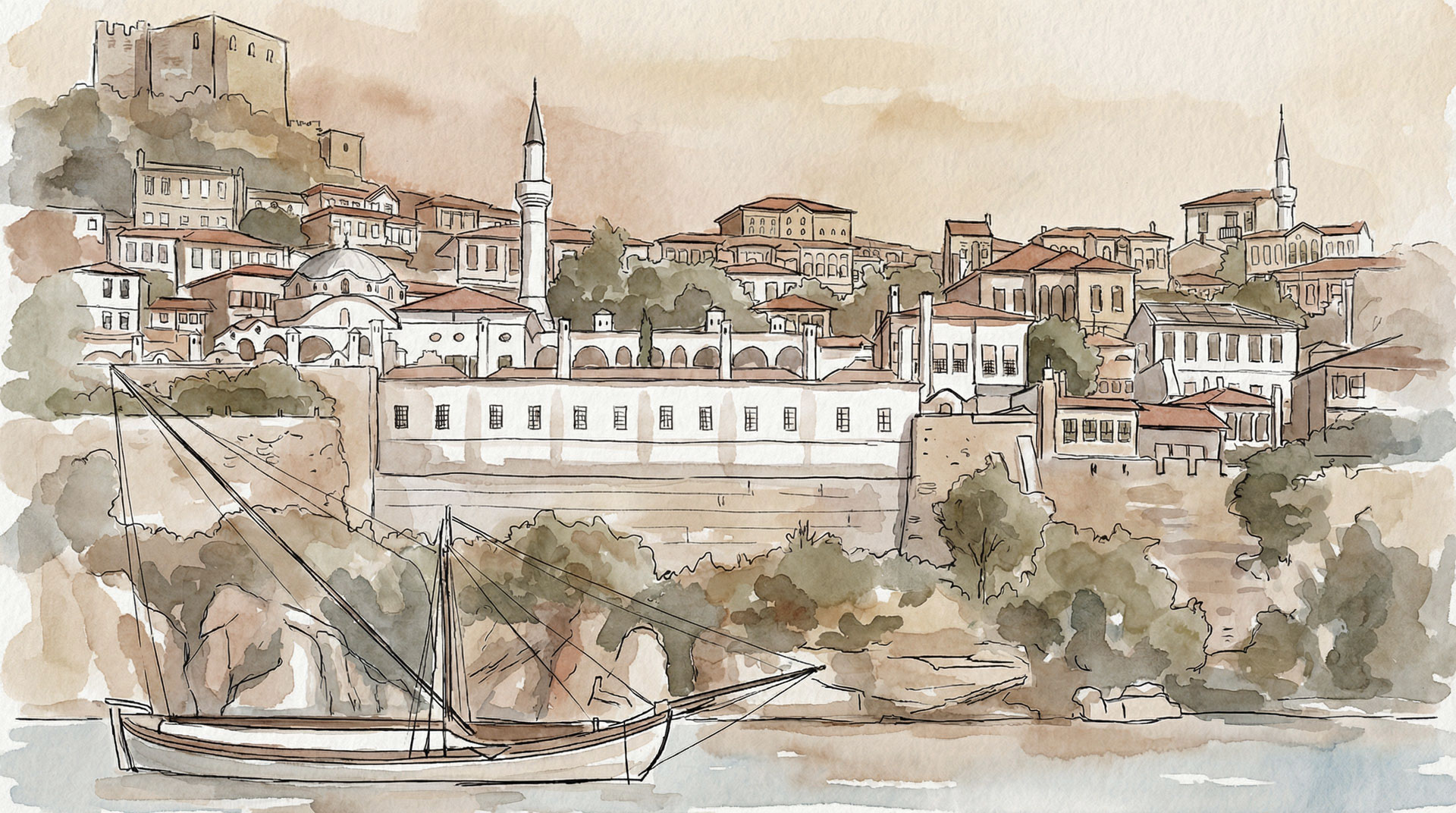
Built on the site of an ancient sanctuary, Imaret was commissioned in 1813 by Mohammed Ali Pasha, founder of modern Egypt, as a gift to his birthplace, Kavala.
Conceived as a charitable and educational foundation, the complex brought together schools, a library of rare holdings established by his order, students’ quarters, kitchens, fountains and gardens within a single carefully ordered ensemble. Its colleges offered both classical education and modern sciences, constituting one of the earliest expressions of a Western-style technical school within the Ottoman world.
Throughout the twentieth century, the gradual loss of its original functions led to a prolonged period of decline. Decades of abandonment, neglect and opportunistic interventions left the monument in a fragile condition, threatening the survival of one of the most significant historic complexes of the region.
At the beginning of the twenty-first century, an extensive restoration secured the future of the monument and reconnected it with contemporary life. Rather than being preserved as a museum, Imaret was carefully restored as a living monument, allowing its architectural, cultural and social legacy to continue into the present day.
Architecture
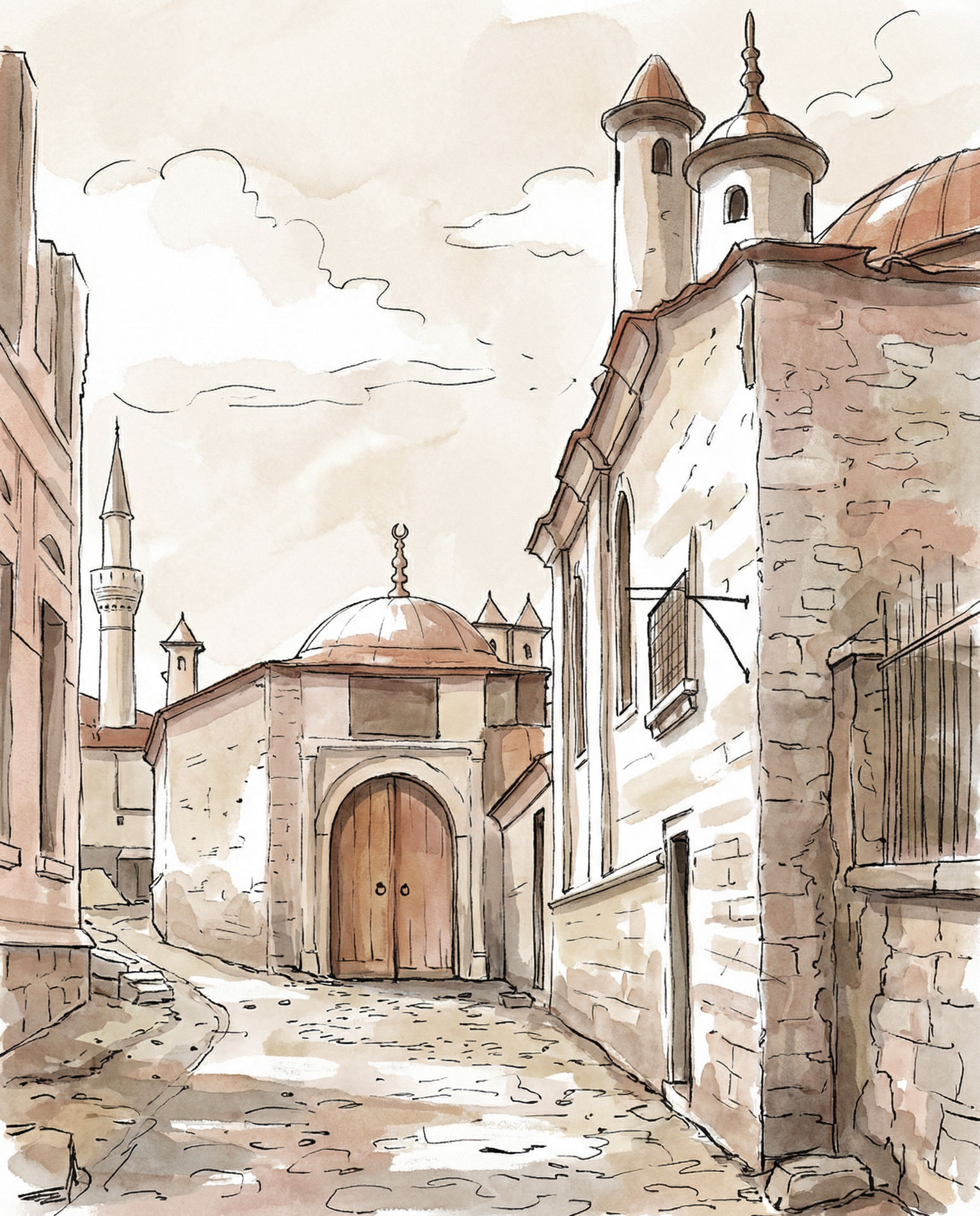
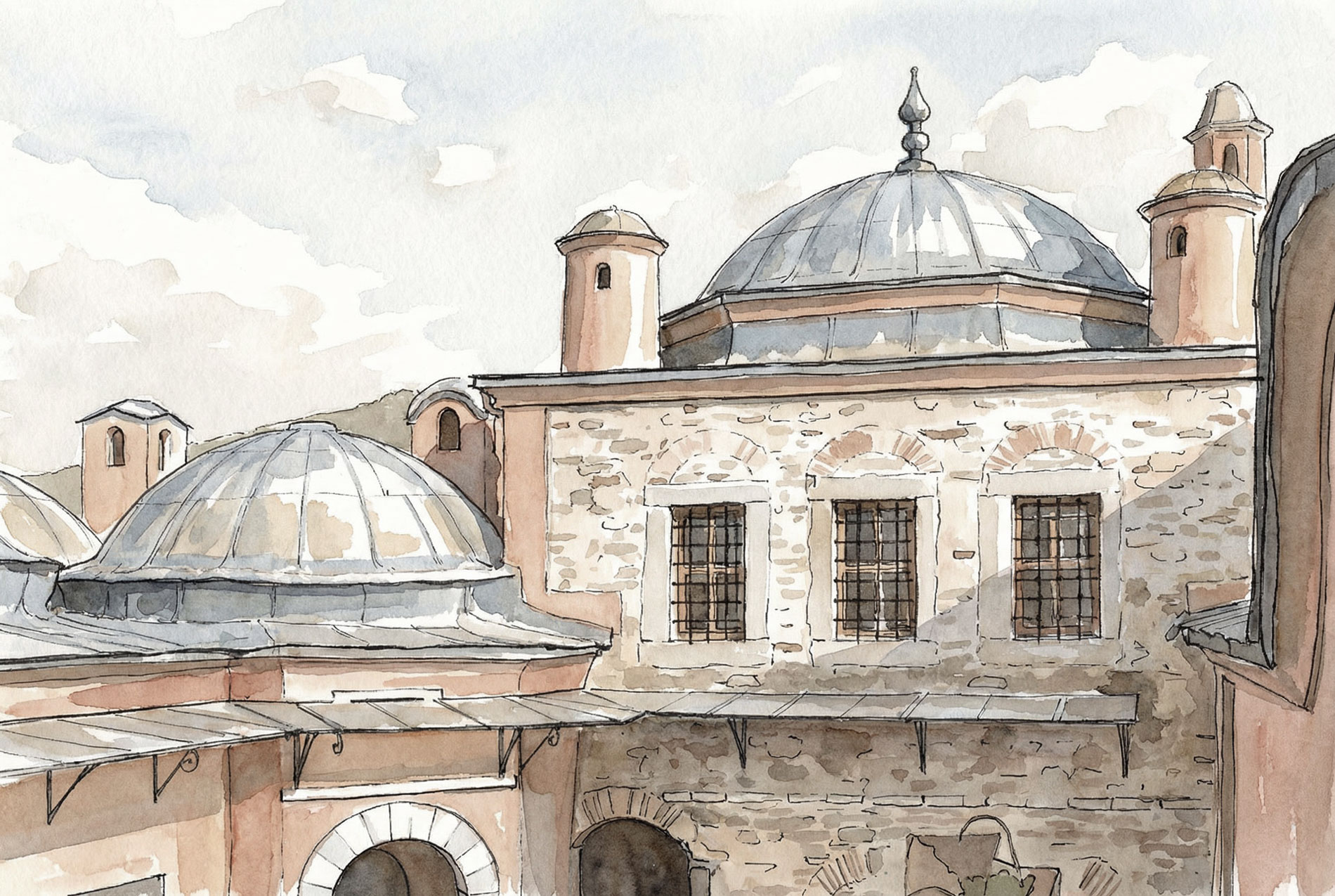
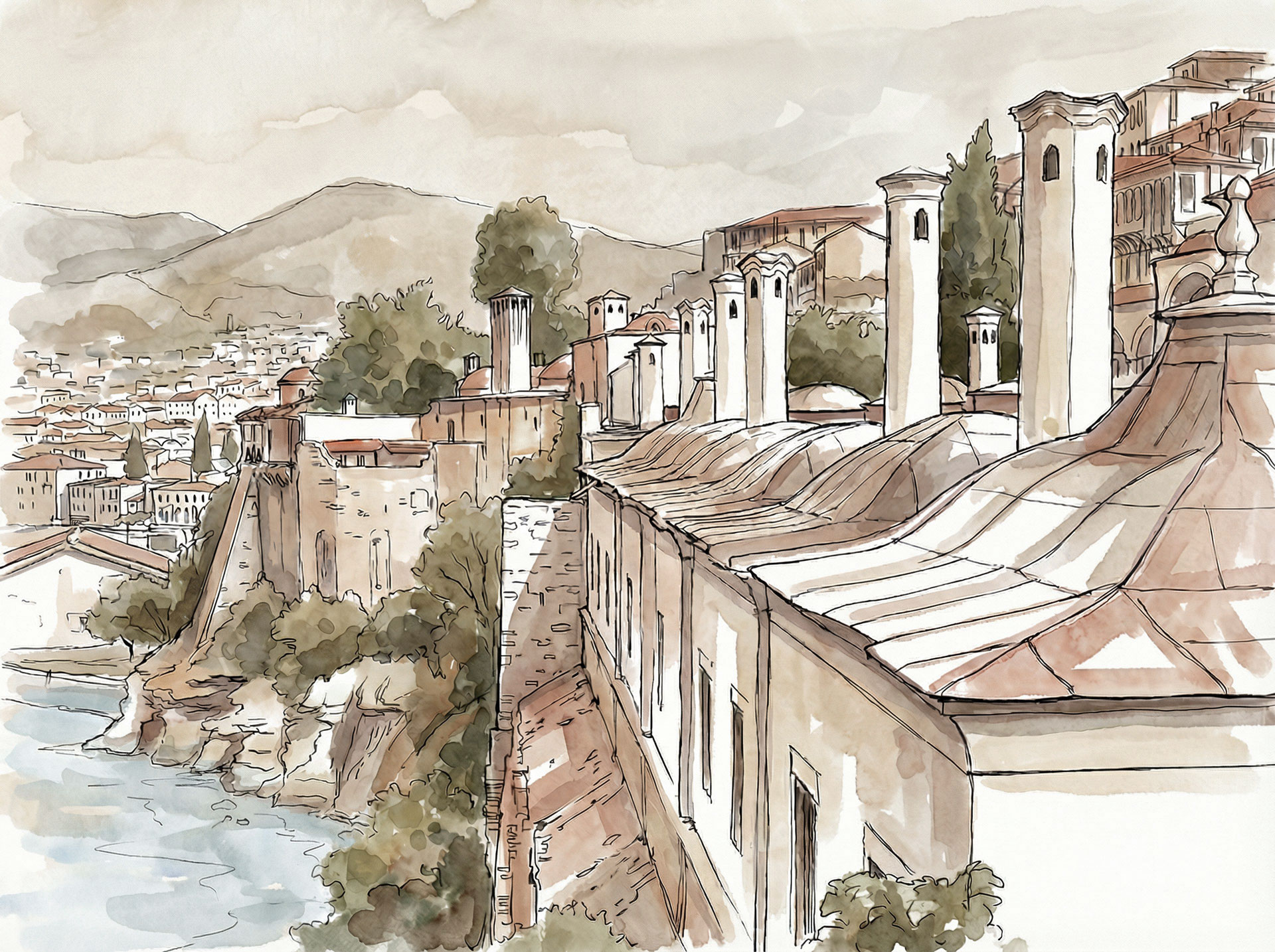
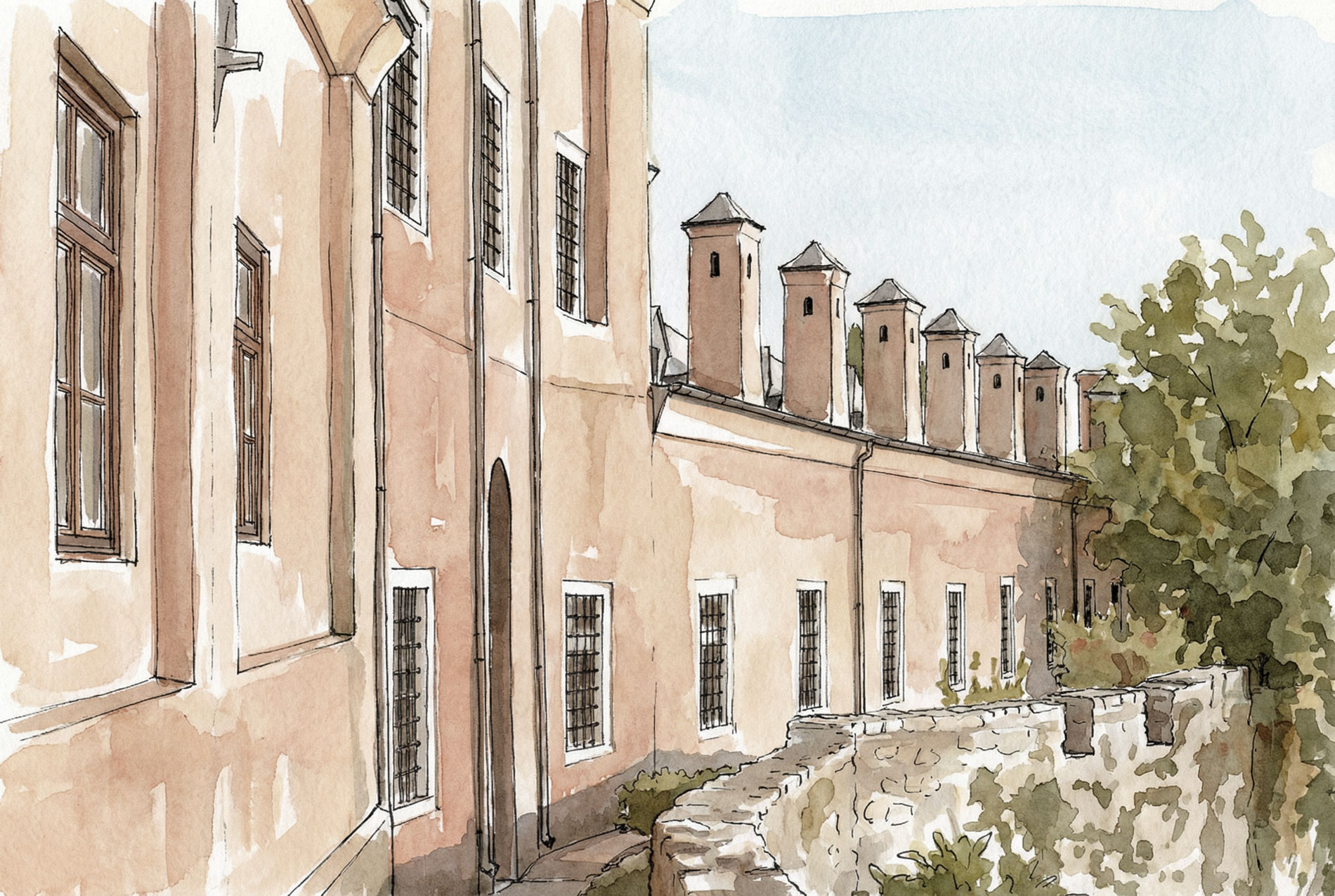
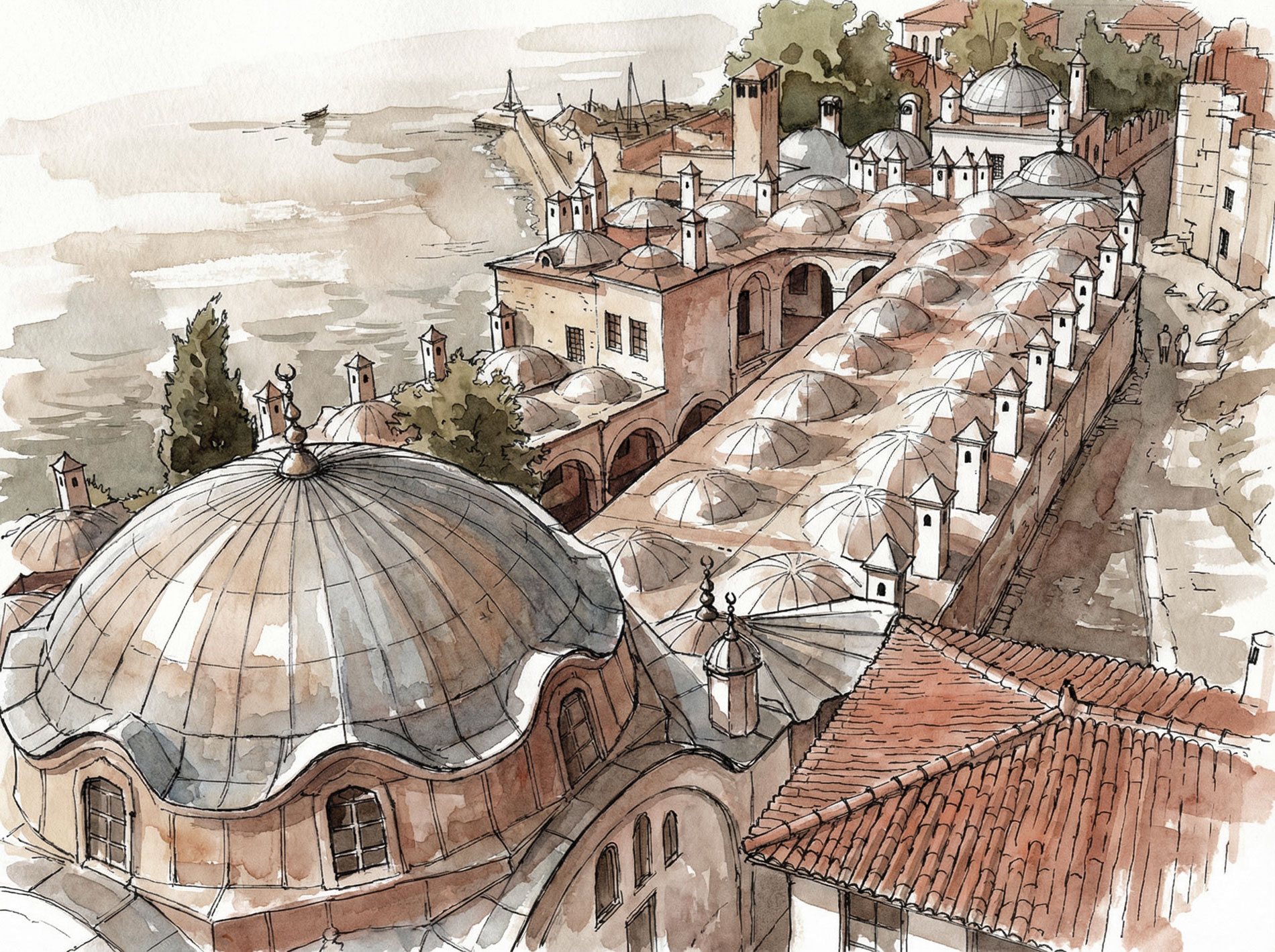
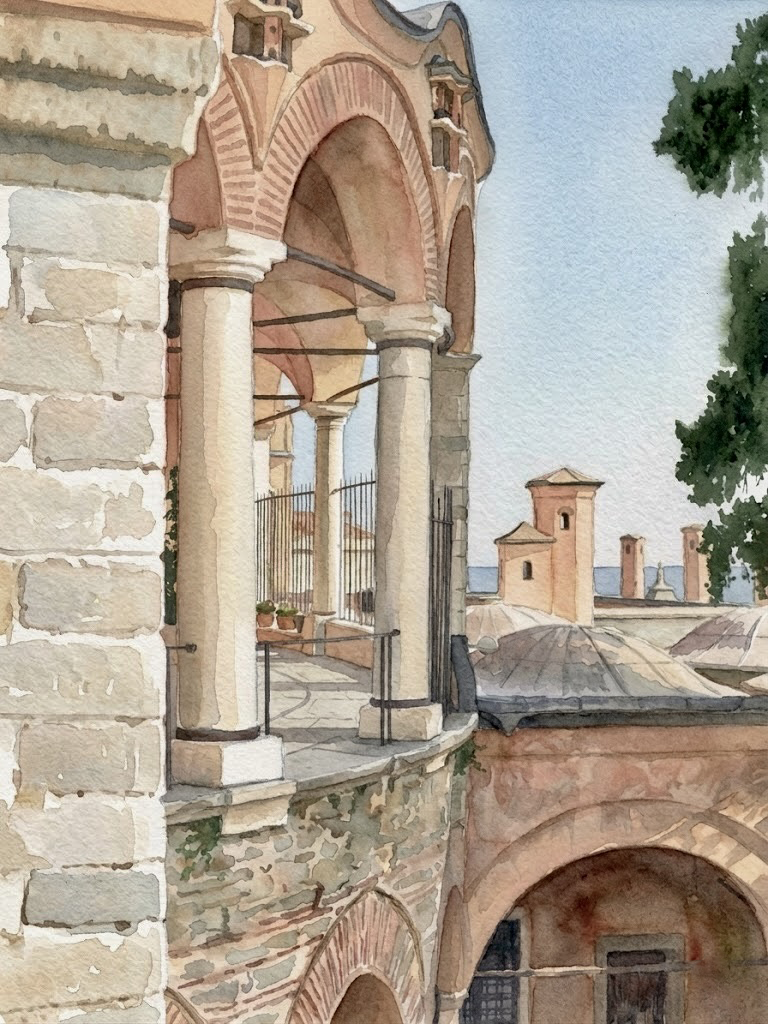
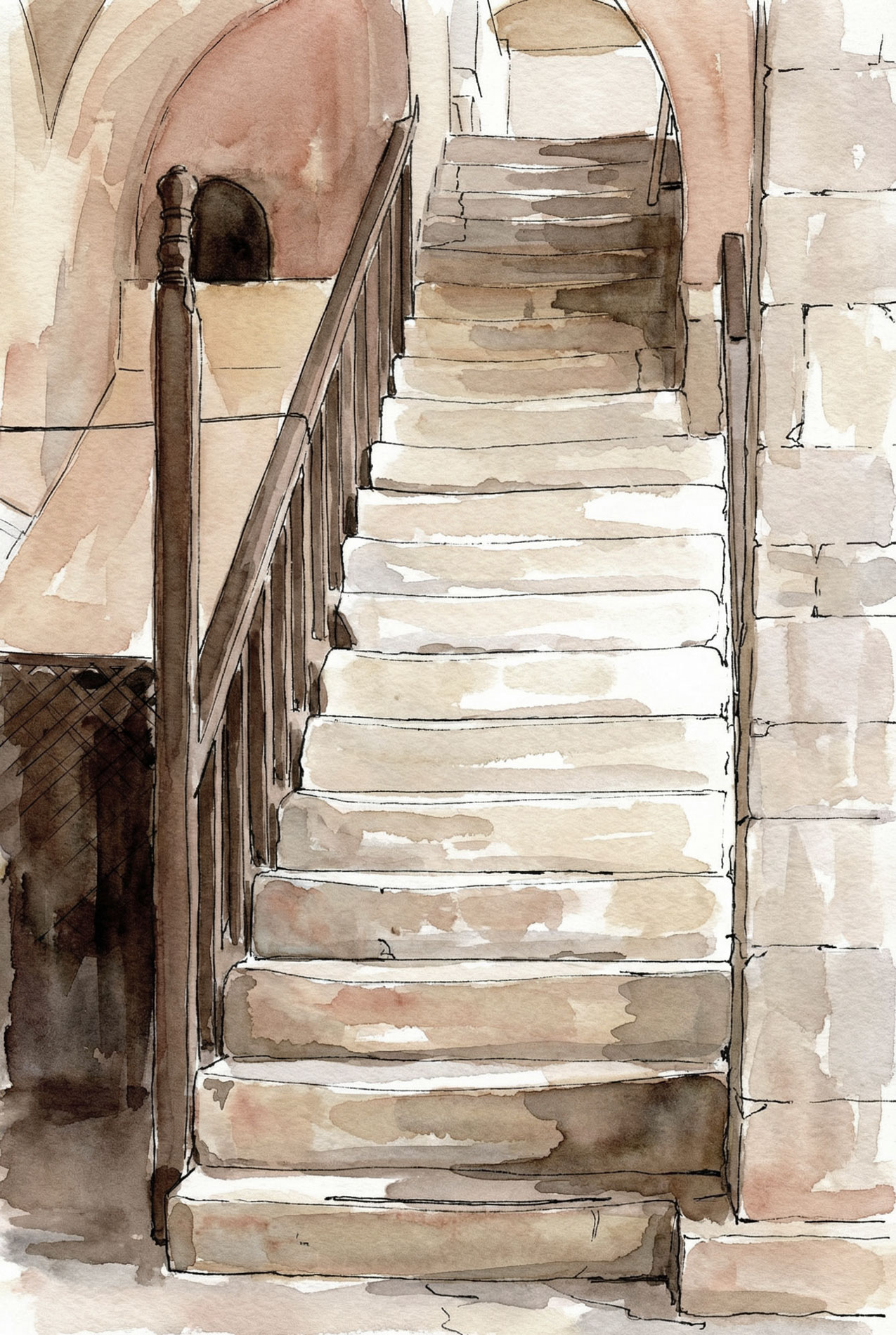
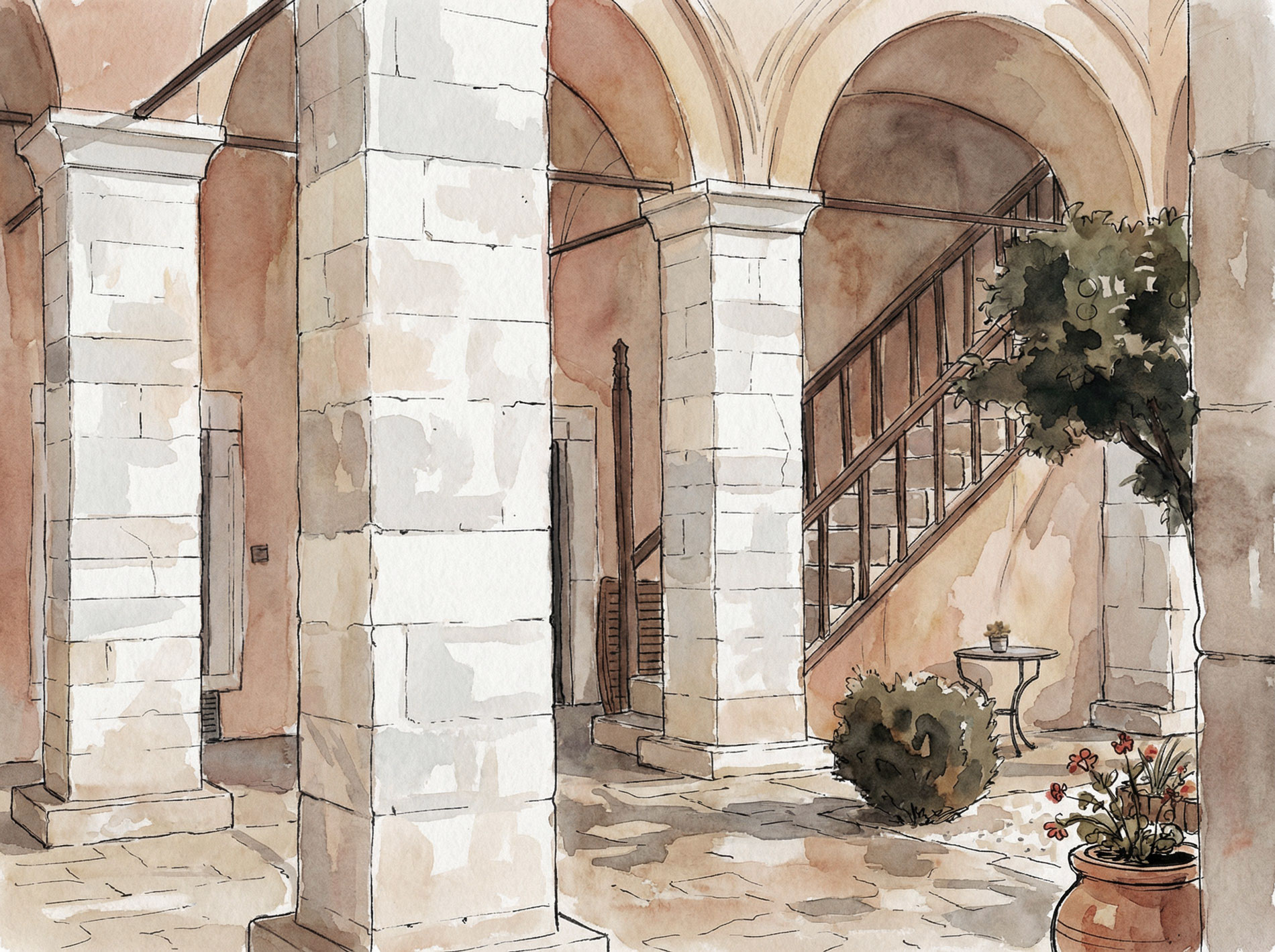
Imaret unfolds across more than 5,000 square metres of courtyards, gardens, domed halls, arcades, fountains and galleries arranged around three inner gardens.
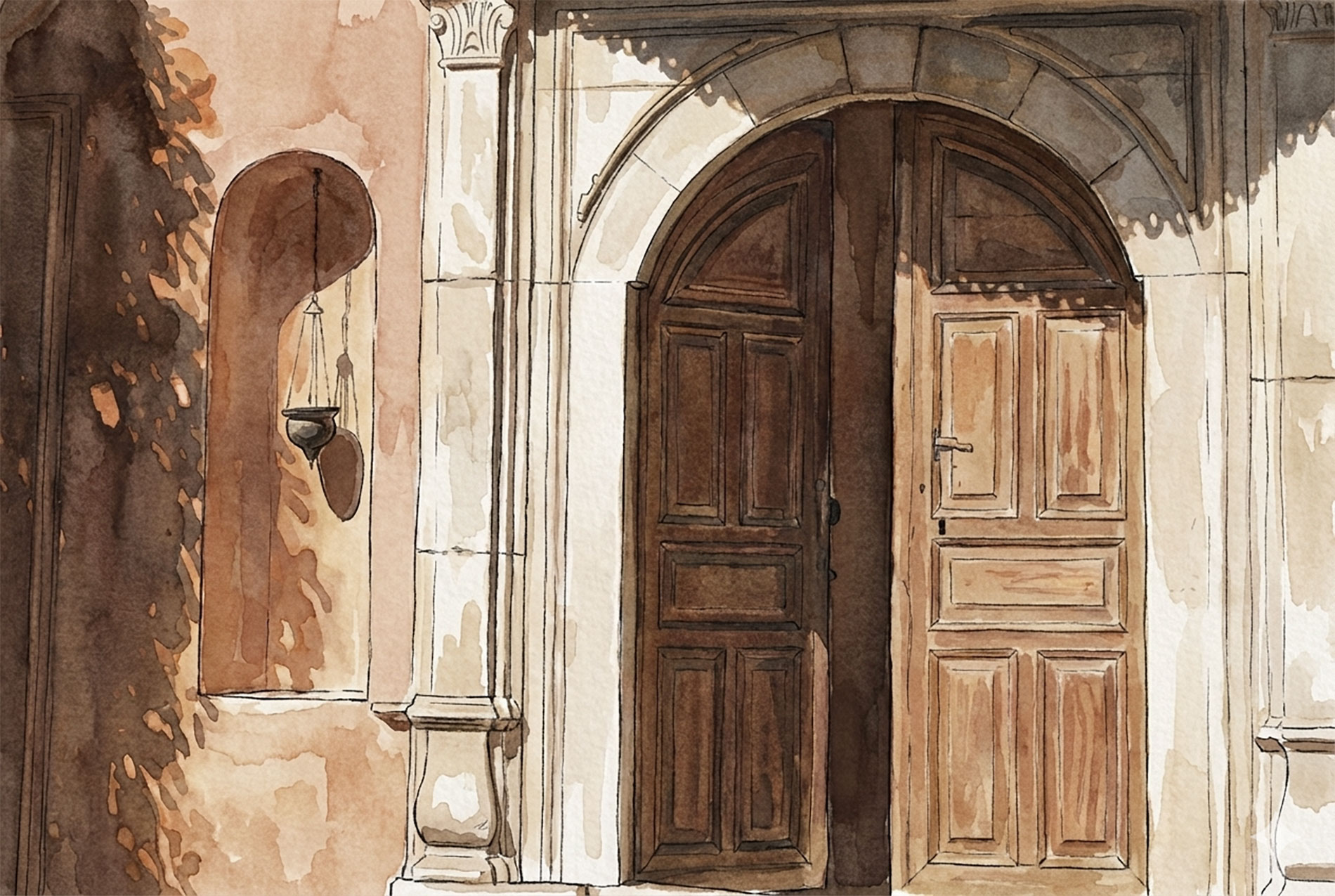
Built on the site of an ancient sanctuary and incorporating marble elements from earlier structures, the complex was conceived as a unified architectural ensemble in which learning, hospitality, worship and daily life coexisted within a protected environment.
In an age increasingly defined by speed, constant stimulation and fragmented attention, environments capable of restoring calm, continuity and a sense of inner balance have become increasingly rare.
Conceived around principles of protection, rhythm, care, learning and human presence, Imaret continues to respond naturally to contemporary needs while remaining faithful to its original character.
More than two centuries after its construction, the intelligence of the building remains remarkably relevant. Through its inward organisation, sheltered courtyards, water, gardens and carefully graduated transitions between open and enclosed spaces, Imaret creates an environment shaped by protection, rhythm and ease.